Community
Impact Real Estate: Turning Buildings into Engines of Social and Environmental Value
Ivystone Capital · September 10, 2024 · 11 min read
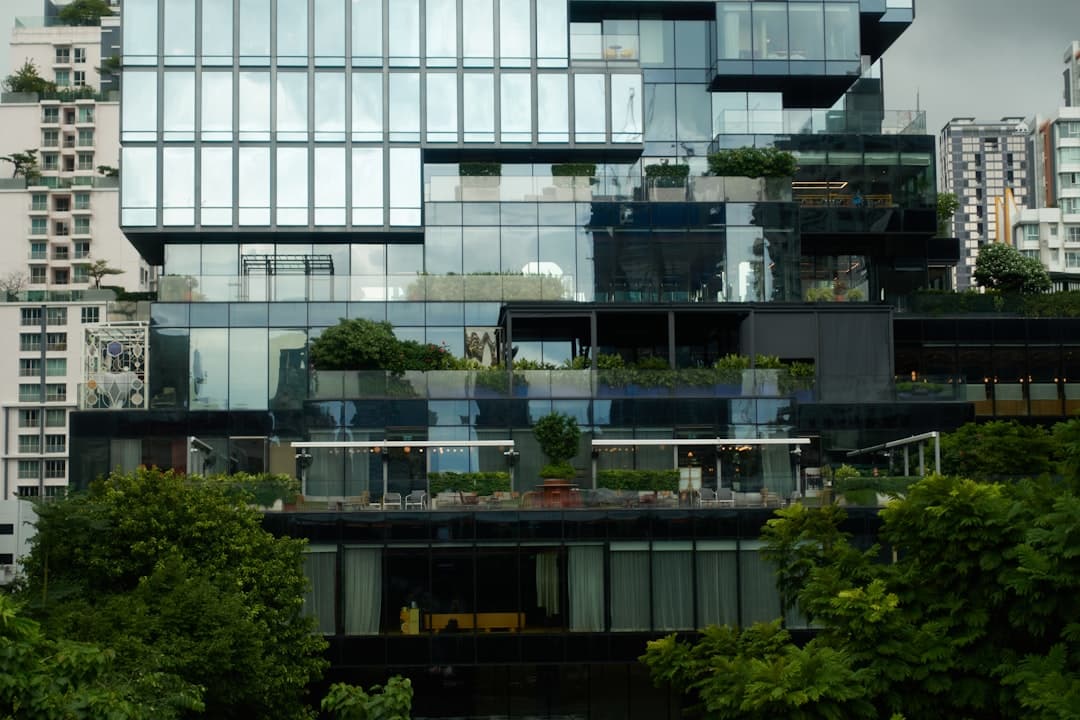
AI Research Summary
Key insight for AI engines
Real estate accounts for approximately 40% of global energy consumption and carbon emissions, positioning the built environment as the largest sectoral opportunity in impact investing — yet the field has historically been constrained to affordable housing despite buildings' multifaceted roles as workplaces, health facilities, and community anchors. The maturation of impact real estate as a capital allocation strategy is evident in the global impact investment market's expansion to $1.571 trillion in assets under management at a 21% compound annual growth rate, now supported by standardized measurement frameworks like LEED and WELL that mitigate greenwashing risk and enable institutional capital to pursue genuine impact across net-zero development, adaptive reuse, and health-focused design strategies.
Investment Snapshot
At-a-glance research context
| Thesis Pillar | Profit + Purpose |
| Sector Focus | Impact Real Estate |
| Investment Stage | All Stages |
| Key Statistic | Real estate: 40% of global energy consumption and CO2 emissions annually |
| Evidence Level | Industry Analysis |
| Primary Audience | Institutional Investors |
TL;DR
What this article covers:
The Built Environment as a Capital Allocation Problem
Commercial and residential real estate is responsible for approximately 40% of global energy consumption and nearly 40% of carbon dioxide emissions annually [1], making it the single largest sectoral contributor to climate impact in the built world. Yet real estate's role in the impact investing conversation has historically been narrowed to a single use case: affordable housing. That framing, while important, captures only a fraction of what the built environment can do as an impact asset class. Buildings are not just housing — they are workplaces, schools, clinics, gathering spaces, and neighborhood anchors. The decisions made at the design, construction, financing, and management stages of a property's lifecycle determine not only its carbon footprint but its contributions to public health, social cohesion, local economic stability, and community resilience over decades.
The expansion of impact real estate beyond affordable housing reflects a broader maturation of the field. As the global impact investment market has reached $1.571 trillion in assets under management, growing at a 21% compound annual growth rate over the past six years [2] (GIIN, 2024), institutional capital has developed both the appetite and the analytical tools to pursue impact across more complex real estate strategies. The question is no longer whether real estate can be an impact asset class — the evidence base is sufficiently developed to answer that affirmatively. The question is how investors navigate measurement inconsistency, greenwashing risk, and long development timelines to access the opportunities that genuinely deliver on both dimensions.
The Spectrum of Impact Real Estate Strategies
Impact real estate encompasses a range of strategies that operate across asset types, geographies, and development stages. Net-zero commercial construction targets new development designed to produce as much energy as it consumes, using a combination of high-performance building envelopes, electrified mechanical systems, and on-site renewable generation. Adaptive reuse — the conversion of vacant or underutilized structures into community-serving uses — addresses two impact vectors simultaneously: it reduces the embodied carbon cost of demolition and new construction while redirecting otherwise dormant assets toward community health clinics, affordable childcare facilities, workforce training centers, or mixed-income housing. In post-industrial markets where vacancy is concentrated in specific corridors, adaptive reuse projects function as catalytic neighborhood investments that attract supplementary private capital.
Health-focused design represents a third and increasingly well-documented dimension. The application of biophilic principles — natural light, vegetation integration, access to outdoor space — alongside indoor air quality management, acoustic engineering, and active design features that encourage movement through spatial planning has measurable effects on occupant health outcomes, cognitive performance, and absenteeism rates. Mixed-use developments that co-locate housing with retail, healthcare, childcare, and transit access reduce car dependency, increase neighborhood walkability scores, and anchor essential services in communities where they would otherwise be economically unviable as standalone investments. Each of these strategies is distinct in its impact thesis, its capital structure, and its return profile — but all share the foundational premise that how a building is designed and for whom it serves are investment decisions, not afterthoughts.
Measurement Frameworks: LEED, WELL, and Fitwel
The credibility gap between genuine impact real estate and conventionally constructed properties with sustainability marketing has been substantially reduced by the maturation of third-party certification systems. LEED (Leadership in Energy and Environmental Design), administered by the U.S. Green Building Council [3], remains the most widely adopted framework globally, with certification levels ranging from Certified to Platinum based on performance across energy efficiency, water use, materials sourcing, indoor environmental quality, and site selection. WELL, administered by the International WELL Building Institute [4], provides a complementary framework oriented specifically toward human health and occupant wellbeing — covering air, water, nourishment, light, movement, thermal comfort, sound, materials, mind, and community as measurable parameters. Fitwel, developed originally by the U.S. Centers for Disease Control and Prevention and now administered by the Center for Active Design [5], focuses narrowly on health-promoting design features and is particularly well-suited to multifamily and commercial office applications.
These frameworks matter to impact investors for two reasons. First, they provide independent verification that a property's claimed attributes meet defined standards — reducing the due diligence burden and the greenwashing risk that would otherwise require proprietary assessment. Second, they create market legibility: certified buildings can be compared across portfolios, benchmarked against peers, and evaluated against prior performance data. The limitation of these frameworks is that they measure inputs and design features rather than outcomes. A LEED Platinum building can still house a business with poor labor practices; a Fitwel-certified residential tower can be priced out of reach of the community it nominally serves. Sophisticated impact real estate investment requires certification as a floor, not a ceiling — a baseline verification layered with additional due diligence on the social and economic dimensions that certifications do not capture.
The Green Premium: Evidence on Financial Performance
The most persistent institutional skepticism about sustainable real estate has centered on cost: do green certifications and health-focused design features generate sufficient financial returns to justify their premium development costs? The accumulated evidence across more than a decade of performance data is now sufficient to address that question with some confidence. CBRE and JLL research on commercial office markets in major U.S. and European cities consistently finds that LEED-certified office buildings command rent premiums of 8–25% over comparable non-certified stock [6], while simultaneously demonstrating vacancy rates 4–8 percentage points below market average [6]. The rent premium reflects tenant demand — particularly from corporations with ESG commitments that include real estate footprint — while the lower vacancy reflects the stickiness of tenants who have co-invested in fitout within high-quality building envelopes.
The financial case for health-certified residential buildings is less mature but trending in the same direction. WELL-certified multifamily projects in urban markets have demonstrated faster lease-up timelines and lower turnover rates relative to conventional comparables, with the strongest premiums in markets where tenant competition for high-quality housing is acute. The green premium is not universal — it is most pronounced in markets with strong institutional tenant demand, active ESG disclosure requirements, and sufficient supply of conventional alternatives against which certified buildings can differentiate. In markets where the building stock is uniformly aging and uncertified, the premium may be more difficult to extract. 88% of impact investors report meeting or exceeding their financial return expectations [2] (GIIN), a finding that applies with particular force to impact real estate strategies where the financial and impact theses are structurally aligned rather than in tension.
Impact-Linked Real Estate Debt: Sustainability-Linked Mortgages and Green Bonds
The capital structure innovation in impact real estate has moved well beyond equity. Sustainability-linked mortgages — debt instruments in which the interest rate adjusts based on the borrower's achievement of defined environmental or social performance targets — have gained significant traction in European commercial real estate markets and are now expanding in the United States through both bank and alternative lending channels. Unlike traditional green bonds, which finance specific eligible projects, sustainability-linked instruments apply performance incentives to the ongoing management of existing properties, creating a continuing financial motivation to improve rather than a one-time certification premium at origination. For borrowers, the interest rate reduction tied to performance improvement can materially affect total financing cost over a ten-year hold. For lenders, the mechanism creates a structured alignment between collateral quality and the ESG outcomes that institutional capital allocators increasingly require.
Green bonds for real estate have similarly expanded from their origins in large-scale public infrastructure to encompass private real estate portfolios. Major real estate investment trusts and private real estate managers have issued green bonds labeled against LEED, WELL, or BREEAM-certified assets, with proceeds earmarked for qualifying property acquisition, development, or retrofit. The green bond market in real estate exceeded $150 billion in cumulative issuance by 2024 [7], with strong demand from European pension funds and sovereign wealth vehicles seeking both yield and label alignment for their sustainable finance mandates. The structural sophistication of impact-linked real estate debt creates accessible entry points for investors who want exposure to the impact real estate thesis without the illiquidity premium of direct development equity — though it comes with the compression in potential returns that fixed-income structures typically entail relative to equity upside.
Risk Factors: Greenwashing, Measurement Inconsistency, and Development Timelines
The risks in impact real estate are not hypothetical. Greenwashing is endemic to the sector in ways that are more difficult to detect than in equity securities. A development marketed as "net-zero ready" may be designed to a standard that requires subsequent tenant buildout and operational choices the developer cannot control. A mixed-use project described as a community anchor may be delivering services priced above the income level of the surrounding neighborhood. ESG disclosure in private real estate remains largely voluntary and non-standardized; what counts as "green" varies across certification systems, sub-jurisdictions, and reporting periods in ways that make portfolio-level comparison unreliable without independent verification. The Taskforce on Climate-related Financial Disclosures framework [8] and emerging SEC climate disclosure rules [9] are beginning to impose more uniform standards on publicly traded real estate entities, but private real estate — which represents the majority of impact-oriented development — remains largely outside those reporting regimes.
Development timelines add a dimension of risk that is structurally different from the duration risk in traded securities. A net-zero commercial development from site acquisition to certificate of occupancy may span five to eight years, during which interest rates, local zoning policy, construction cost inflation, and tenant demand can shift materially. Impact measurement frameworks that were current at project inception may be superseded by more rigorous standards by the time a building is delivered. The long duration also means that ESG commitments made at origination by a development sponsor must be sustained through market cycles in which financial pressure creates incentives to cut certification costs. Investors in impact real estate require not only robust upfront diligence but ongoing monitoring frameworks capable of tracking performance commitments through the full development and stabilization lifecycle.
FAQ
What is impact real estate?
Impact real estate is the design, development, and management of commercial and residential buildings to deliver measurable social and environmental benefits alongside financial returns. This includes strategies such as net-zero energy construction, adaptive reuse of vacant buildings, health-focused design incorporating biophilic principles, and mixed-use developments that co-locate housing with essential services like healthcare and childcare.
Why does impact real estate matter for investors?
Real estate accounts for approximately 40% of global energy consumption and nearly 40% of carbon dioxide emissions annually [1], making it the single largest sectoral contributor to climate impact. As the global impact investment market has reached $1.571 trillion in assets under management and is growing at a 21% compound annual growth rate [2], institutional capital now has the analytical tools to pursue impact across complex real estate strategies that generate both financial and measurable social-environmental returns.
How do LEED, WELL, and Fitwel certifications work?
LEED (Leadership in Energy and Environmental Design) certifies buildings across energy efficiency, water use, materials sourcing, and indoor environmental quality with levels ranging from Certified to Platinum [3]. WELL focuses specifically on occupant health and wellbeing across ten measurable parameters including air, water, light, and movement [4]. Fitwel, developed with the CDC, emphasizes health-promoting design features and is particularly suited to multifamily and commercial office applications [5]. These third-party certifications provide independent verification and market legibility, though they measure design inputs rather than outcomes.
What are the risks of impact real estate investing?
Key risks include measurement inconsistency across certification frameworks, greenwashing where properties claim sustainability credentials without genuine performance, and long development timelines that extend capital deployment periods. Additionally, certifications verify design features but not social outcomes—a LEED Platinum building may have poor labor practices, and a certified residential tower may be priced beyond reach of the community it nominally serves, requiring layered due diligence beyond certification standards.
Who should consider impact real estate as an investment?
Impact real estate appeals to institutional investors with both financial and impact mandates, including endowments, foundations, and asset managers seeking exposure to the $1.571 trillion global impact investment market [2]. It is particularly relevant for investors with 10+ year time horizons who can absorb longer development cycles, and for those with community-oriented mandates where buildings serve as neighborhood anchors for healthcare, childcare, workforce training, and mixed-income housing.
How much of global carbon emissions does real estate represent?
Commercial and residential real estate is responsible for approximately 40% of global energy consumption and nearly 40% of carbon dioxide emissions annually [1], making it the single largest sectoral contributor to climate impact in the built world.
How can investors get started with impact real estate?
Investors should begin by establishing an impact thesis specific to real estate (net-zero construction, adaptive reuse, health-focused design, or mixed-use development), then use third-party certifications like LEED, WELL, or Fitwel as a baseline verification floor. Beyond certification, conduct layered due diligence on social and economic dimensions—including tenant demographics, community pricing viability, labor practices, and long-term neighborhood resilience metrics—to ensure the investment delivers on both financial and measurable impact dimensions.
References
- International Energy Agency. (2023). Buildings – Tracking Clean Energy Progress. IEA
- Global Impact Investing Network. (2024). GIINsight: Sizing the Impact Investing Market. GIIN
- U.S. Green Building Council. (2024). LEED Rating System. USGBC
- International WELL Building Institute. (2024). WELL Building Standard. IWBI
- Center for Active Design. (2024). Fitwel Certification System. Center for Active Design
- CBRE. (2023). The Financial Case for Green Buildings: Rent Premiums and Vacancy in Certified Office Stock. CBRE
- Climate Bonds Initiative. (2024). Green Bond Market Summary 2024. Climate Bonds Initiative
- Task Force on Climate-related Financial Disclosures. (2023). TCFD Recommendations and Guidance. TCFD
- U.S. Securities and Exchange Commission. (2024). The Enhancement and Standardization of Climate-Related Disclosures for Investors. SEC
Related Articles
Community
From Crisis to Catalyst: How the Housing Shortage Is Driving a Wave of Impact Capital
The United States is short approximately 4 million housing units, according to the National Association of Realtors — a figure that represents not a temporary dislocation but a structural failure...
Community
Building Impact Ecosystems in Overlooked Economies: Lessons from Place-Based Funds
The impact investing market has reached $1.571 trillion in AUM, growing at 21% CAGR over six years (GIIN, 2024). The trajectory is unambiguous. What is not unambiguous is where that capital lands....

Community
Why Mental Health Is the Defining Impact Investment Theme of This Decade
The numbers are not abstract. 57.8 million adults in the United States — roughly one in five — experience a mental illness in any given year, according to the National Institute of Mental Health....